
Macros
How to Calculate Your Macros for Weight Loss: A Complete Guide for 2026
Knowing how to calculate your macros for weight loss is one of the most powerful steps anyone can take on

Personalized fiber recommendations based on your calorie needs
A daily fiber intake calculator estimates the amount of dietary fiber an adult should consume each day, based on biological sex, age, and total calorie intake. Dietary fiber — the non-digestible carbohydrate fraction found in plant foods — is recognised by the National Academies of Medicine, the World Health Organization (WHO), and the USDA Dietary Guidelines for Americans as an essential component of a health-protective diet. Despite near-universal dietary guidance to prioritise fiber, surveys consistently show that fewer than 5% of adults in the US meet their daily recommended intake — making it one of the most widespread nutritional shortfalls in the modern diet.
WellCal's fiber calculator applies the Adequate Intake (AI) formula established by the National Academies of Medicine: 14 g of dietary fiber per 1,000 kilocalories consumed. For reference calorie intakes, this yields targets of 38 g/day for men aged 19–50 and 25 g/day for women aged 19–50. For adults over 50, targets adjust to 30 g (men) and 21 g (women) to reflect typical reductions in caloric intake. These values are consistent with guidance from the Mayo Clinic and the European Food Safety Authority (EFSA), and are used as the basis for food labelling Daily Values in the United States.
Fiber intake does not exist in isolation — it interacts directly with your total calorie intake, macronutrient balance, and hydration levels. Once you have your daily fiber target, consider using our free Calorie Calculator to establish your total energy needs, and our Macro Calculator to set carbohydrate, protein, and fat goals that complement your fiber target. If you are managing blood sugar, our Diabetes Risk Calculator can help you understand how dietary changes — including increasing fiber — affect your long-term metabolic health.
| Life Stage | Men (g/day) | Women (g/day) | Source |
|---|---|---|---|
| Adults 19–50 | 38 g | 25 g | National Academies of Medicine AI |
| Adults 51+ | 30 g | 21 g | National Academies of Medicine AI |
| Pregnancy | — | 28 g | National Academies of Medicine AI |
| Lactation | — | 29 g | National Academies of Medicine AI |
| Formula (all adults) | 14 g per 1,000 kcal consumed | DRI / USDA Dietary Guidelines | |
Meeting your daily fiber target does far more than support digestion. Here are eight clinically documented ways dietary fiber protects and improves your health — and what the research says about each.
Insoluble fiber — found in wheat bran, whole grains, and the skins of vegetables — adds bulk and weight to stool and speeds intestinal transit time, directly reducing the risk of constipation. The National Institute of Diabetes and Digestive and Kidney Diseases (NIDDK) identifies adequate insoluble fiber intake as the primary dietary strategy for managing and preventing constipation in otherwise healthy adults. A 2012 meta-analysis found that increasing fiber intake significantly improved stool frequency and consistency across all age groups. If you are also tracking your hydration to support digestive health, our Water Intake Calculator can help you ensure you are consuming enough fluid — essential for fiber to function effectively in the gut.
Soluble fiber — particularly beta-glucan from oats and barley, and pectin from fruits — forms a viscous gel in the small intestine that binds to bile acids and cholesterol, preventing their reabsorption into the bloodstream. The American Heart Association (AHA) endorses high-fiber diets as a core strategy for reducing LDL ("bad") cholesterol — a primary driver of atherosclerosis and coronary artery disease. A landmark 2019 review in The Lancet, analysing data from 185 prospective studies, found that those in the highest fiber consumption quartile had a 15–30% lower risk of cardiovascular mortality compared to those with the lowest intake. Use our Cholesterol Ratio Calculator to monitor how dietary changes are affecting your lipid profile over time.
Soluble fiber slows the rate at which sugars are absorbed into the bloodstream by forming a gel matrix around food particles in the digestive tract, effectively flattening post-meal glucose spikes. This mechanism is particularly important for people with prediabetes or type 2 diabetes, as well as those looking to prevent metabolic disease. The CDC's Diabetes Prevention Program specifically recommends increasing dietary fiber as part of lifestyle interventions to reduce diabetes risk. Research published in JAMA Internal Medicine found that each 10 g/day increase in total fiber intake was associated with a 27% reduction in type 2 diabetes incidence. See where you stand with our Diabetes Risk Calculator.
High-fiber foods are typically lower in energy density and take longer to chew and digest, which prolongs feelings of fullness and reduces total calorie intake at subsequent meals — a mechanism supported by multiple randomised controlled trials. Viscous soluble fibers such as psyllium and guar gum have been shown to specifically suppress appetite hormones and delay gastric emptying. The National Heart, Lung, and Blood Institute (NHLBI) recommends increasing dietary fiber as a practical and sustainable strategy for weight management without severe caloric restriction. People aiming for weight loss often find that meeting fiber targets naturally leads to reduced snacking and lower overall energy intake. Combine fiber tracking with our Calorie Calculator to build a complete picture of your energy balance.
Fermentable fiber — including inulin, fructooligosaccharides (FOS), and resistant starch — acts as a prebiotic, selectively feeding beneficial bacteria such as Bifidobacterium and Lactobacillus species in the large intestine. When these bacteria ferment fiber, they produce short-chain fatty acids (SCFAs) — particularly butyrate, propionate, and acetate — which nourish the gut lining, reduce intestinal permeability, and exert systemic anti-inflammatory effects. A 2022 study published in Cell demonstrated that high-fiber diets significantly increased microbial diversity and reduced inflammatory markers including interleukin-6 and CRP. A thriving gut microbiome is increasingly linked to improved immune function, mental health, and even cardiovascular resilience. Track your protein intake alongside fiber using our Protein Calculator to ensure a microbiome-supportive, balanced diet.
Adequate fiber intake is one of the most robustly evidence-based dietary strategies for reducing the risk of colorectal cancer — the second leading cause of cancer death globally. Fiber protects the colon through multiple mechanisms: faster transit time reduces the exposure of the gut lining to potential carcinogens in digested food; butyrate (produced during fiber fermentation) acts directly as an anti-carcinogenic agent by inhibiting the growth of abnormal cells; and the bulking action of insoluble fiber dilutes carcinogenic compounds in the colon. The National Cancer Institute recognises high dietary fiber intake as associated with reduced colorectal cancer risk based on multiple large cohort studies. A 2011 meta-analysis in the BMJ found that every 10 g/day increase in fiber was associated with a 10% reduction in colorectal cancer risk. Pair fiber goals with your overall nutritional targets using our Macro Calculator.
Several clinical trials have found that increasing dietary fiber intake — particularly from soluble sources such as oats, flaxseed, and psyllium — leads to modest but statistically significant reductions in both systolic and diastolic blood pressure. The mechanism is thought to involve improvements in arterial elasticity, reductions in LDL cholesterol, and the systemic anti-inflammatory effects of SCFAs. The NHLBI includes high-fiber diets as a key component of the DASH (Dietary Approaches to Stop Hypertension) dietary pattern, one of the most clinically validated dietary strategies for blood pressure management. A meta-analysis of 25 RCTs found that dietary fiber supplementation reduced systolic blood pressure by an average of 1.7 mmHg — meaningful at a population level. Understand your full metabolic picture by also using our BMI Calculator.
Beyond individual disease outcomes, high dietary fiber intake is associated with reduced all-cause mortality across multiple large prospective cohort studies. A landmark NIH-AARP Diet and Health Study — following over 388,000 adults for nine years — found that men and women in the highest fiber intake quintile had a 22% and 19% lower risk of dying from any cause, respectively, compared to those in the lowest quintile. The greatest mortality reductions were seen for cardiovascular disease, infectious disease, and respiratory disease. The protective effect appears dose-dependent and is observed for both soluble and insoluble fiber from food sources. Harvard T.H. Chan School of Public Health's The Nutrition Source summarises the compelling body of evidence linking high-fiber diets to greater longevity. Use our Body Age Calculator to see how your lifestyle — including fiber intake — may be affecting how your body ages.
Most adults are consuming roughly half their recommended fiber intake. These six evidence-based strategies — each targeting a different dietary pattern — can help you close the gap without overhauling your entire diet.
Your daily fiber target is a powerful baseline — but it works best alongside a fuller picture of your nutrition and health metrics. Explore these free WellCal calculators to build on what you've learned.
Knowing how to calculate your macros for weight loss is one of the most powerful steps anyone can take on

Do you know how many ultrasounds during pregnancy are required?For most expectant parents, few moments in a pregnancy journey are

A high-protein liquid diet is a short-term eating plan where all meals come from liquids that are rich in protein.

A liquid diet replaces some or all solid foods with liquids for a short period. Many people try liquid diets
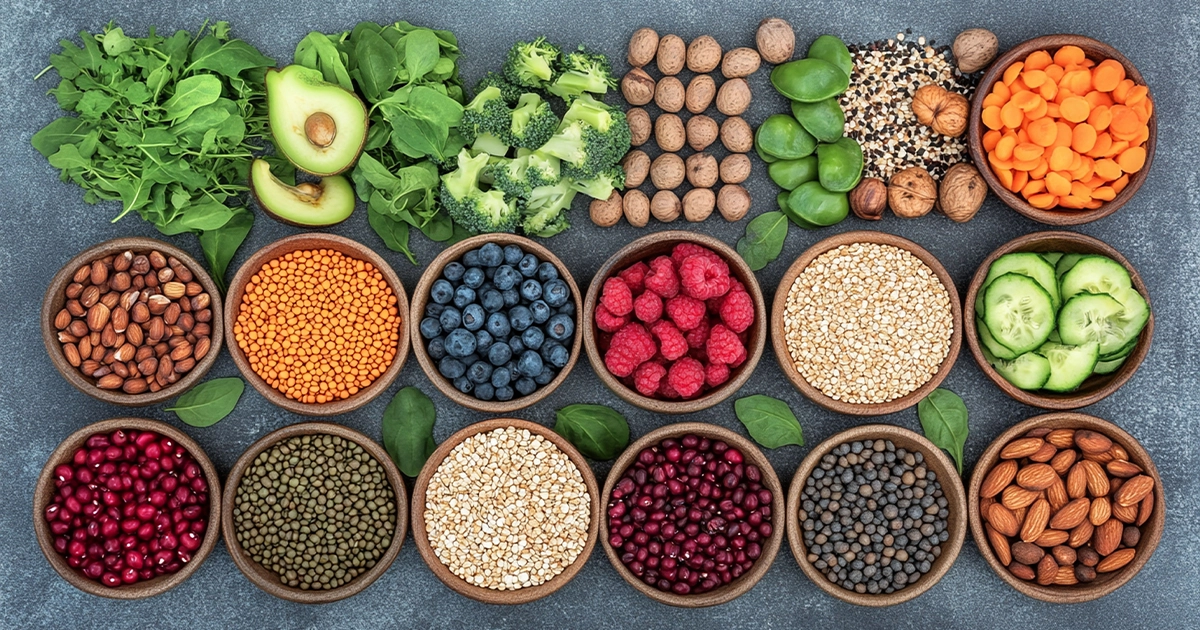
Fiber is an essential nutrient that plays a crucial role in maintaining digestive health, regulating blood sugar levels, and supporting

Aging is a natural part of life, but how we age is influenced by various lifestyle choices. While we can’t